PILNA 2025: Learning recovery in the Pacific, but gaps remain
Tuesday, 8 Sep 2026
Results from the Pacific’s largest regional education assessment provide important evidence to help countries strengthen foundational learning and target support where it is needed most.
New results from the Pacific Islands Literacy and Numeracy Assessment (PILNA) show signs of learning recovery across the region, while highlighting the need for continued action on reading, higher-order thinking skills and student and educator wellbeing.
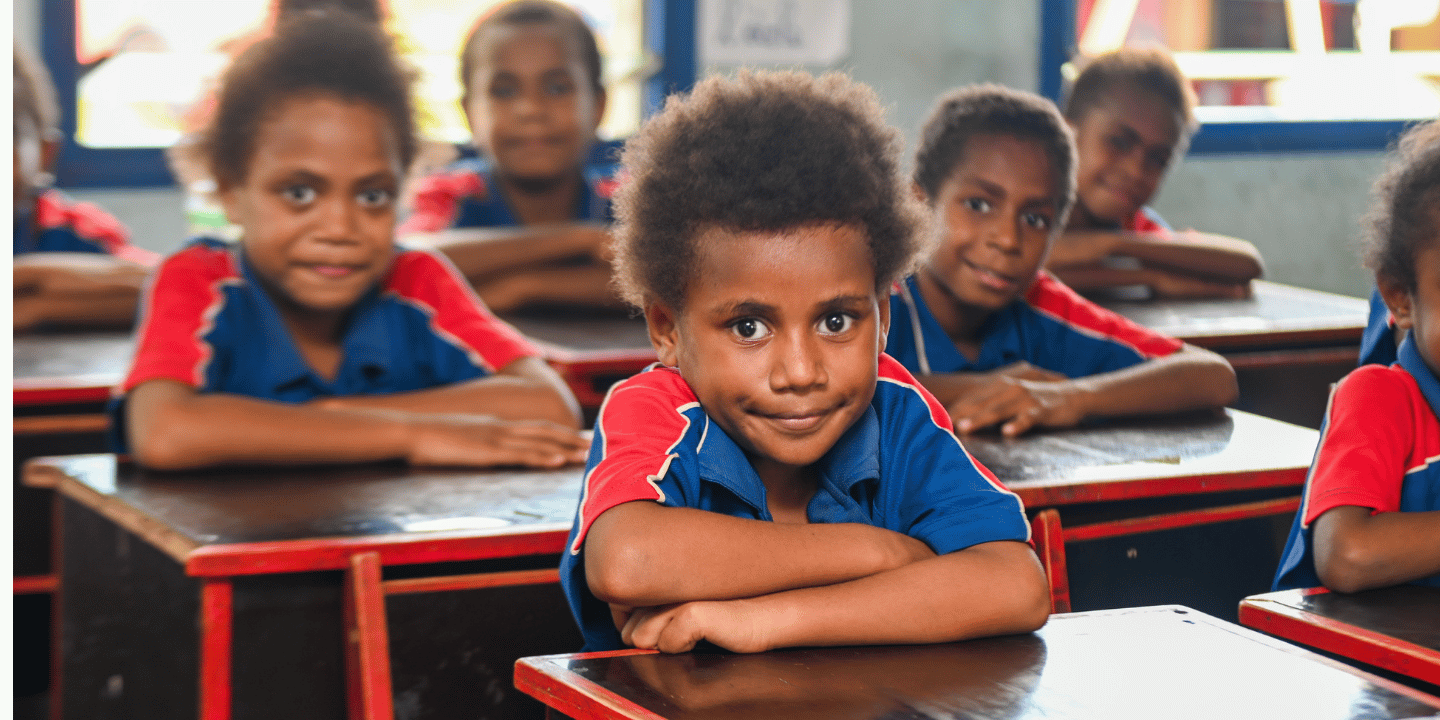
PILNA 2025 was administered across 15 Pacific Island countries to over 41,000 students who had completed 4 and 6 years of basic education. Led by the Pacific Community’s (SPC)’s Educational Quality and Assessment Programme (EQAP), and funded by the governments of Australia and New Zealand, the assessment measures student performance in numeracy, reading and writing. It also collects contextual information from students, caregivers, teachers and school leaders.
ACER has worked with SPC as a technical partner since the second cycle of PILNA in 2015. For PILNA 2025, ACER provided technical assistance in data analysis and reporting, as well as in assessment enhancements adopted in this cycle that help to strengthen the quality and usefulness of evidence available to Pacific education systems.
Signs of improvement, but uneven progress
The results show modest gains in numeracy and reading since 2021, but performance has generally not returned to levels seen in 2018. Improvements appear to be concentrated at the lower end of the proficiency scale, with fewer students performing at the lowest levels, rather than large increases in the proportions reaching the highest levels.
At Year 4, 72% of students met or exceeded the minimum expected proficiency level in numeracy, 44% met or exceeded the expected level in reading and 69% met or exceeded the expected level in writing. At Year 6, 70% of students met or exceeded the expected level in numeracy, 54% in reading and 52% in writing.
In the PILNA 2025 report average writing scores were compared for the first time against a regional writing proficiency scale. This gives Pacific education systems a new baseline for tracking writing achievement over time and strengthens PILNA’s role as a large-scale assessment that directly measures reading, writing and numeracy.
Reading and gender gaps remain
Girls continued to outperform boys across numeracy, reading and writing in both year levels, although the gender gap in numeracy and reading has narrowed. In Year 4 reading, 49% of girls met or exceeded the expected level compared with 38% of boys. In Year 6 reading, the figures were 61% for girls and 48% for boys.
Caregiver support linked to higher achievement
The report shows a positive relationship between caregiver support and achievement, reinforcing the importance of home support for children’s foundational learning.
Well-being and resources shape learning conditions
Beyond achievement, the contextual findings point to significant wellbeing and system-level challenges. Around half of the students reported experiencing some form of bullying during the past year. Moreover, 78% of students had teachers who reported experiencing stress at work and 67% had teachers who felt overwhelmed by their job. These pressures sit alongside strong professional commitment, with 97% of students having teachers who reported being proud of their work.
Access to resources is uneven. Across the region, around a quarter of students were in classes where each student had their own literacy and numeracy textbooks, while around one in 10 had no textbook access at all. Around 32% of students attended schools with computers for student use, 28% attended schools with internet access for students and 11% attended schools with access to individual electronic devices.
Evidence to guide targeted support
Dr Elizabeth Cassity, Principal Research Fellow at ACER, said PILNA 2025 provides vital evidence for Pacific education systems as they continue to respond to the disruption of recent years.
‘The results show encouraging signs of recovery, particularly in parts of numeracy and reading, but they also make clear that recovery is uneven,’ Elizabeth said.
‘PILNA helps countries see not only whether students are meeting expected levels, but also the conditions that support or constrain learning. By working alongside SPC, Pacific ministries and development partners, ACER is helping strengthen the evidence base that countries can use to target support where it is needed most.’
Torika Taoi, Team Leader for Large Scale Assessments at the Pacific Community’s (SPC) Educational Quality and Assessment Programme, said the focus now is on turning data into action.
‘Through country engagement, train-the-trainer programmes and regional data-mining workshops, we seek to ensure that countries not only access the PILNA findings but also use them to inform decisions. In the end, the success of this work will be judged not by the reach of the report, but by its influence on education policy, planning and classroom practice across the Pacific,’ said Torika.
The report identifies three priority areas for intervention: student reading, higher-order thinking skills and the wellbeing of students and educators. Its recommendations are directed at governments and regional entities, educators and caregivers, recognising that improving foundational learning requires coordinated action across classrooms, homes and education systems.
Next steps for Pacific education systems
Following the release of the regional report, ACER and SPC will continue working with participating countries to understand their results, support country-level analysis and use evidence to inform improvements to teaching and learning across the Pacific. Further analysis of the PILNA 2025 findings is expected to explore important themes such as early childhood education, teacher outcomes and digital technologies in Pacific education systems.
Learn more