What helps teachers support student learning in Lao PDR?
Monday, 5 Oct 2026
A new study involving 3,000 students in Lao PDR will connect evidence about student learning with classroom practice, teacher support and teaching materials.
This international World Teachers’ Day (5 October 2026), the global education community is calling on governments and education systems to stand with teachers and recognise their role in shaping futures. In Lao PDR, a new research partnership is acting on that call by investigating what teachers need to strengthen children’s language and literacy development in the early years of school.
The challenge for early years educators in Lao PDR
Children in Lao PDR enter school with diverse experiences and language backgrounds. Around 40% of Grade 1 children are not yet confident speaking Lao when they start school. Regional and national assessments reveal persistent learning gaps, particularly among children from rural, low-income and non-Lao-Tai-speaking communities.
Previous research has linked student achievement with factors including household wealth, students’ exposure to books and stories at home, and student attendance. Teacher experience, participation in continuing professional development, teacher and student home languages, and access to school facilities are also factors.
Examining effective approaches in the early years
The Inclusive Teaching and Learning for Literacy and Language Development Study will go beyond measuring achievement to investigate what happens in classrooms and why some approaches are more effective than others.
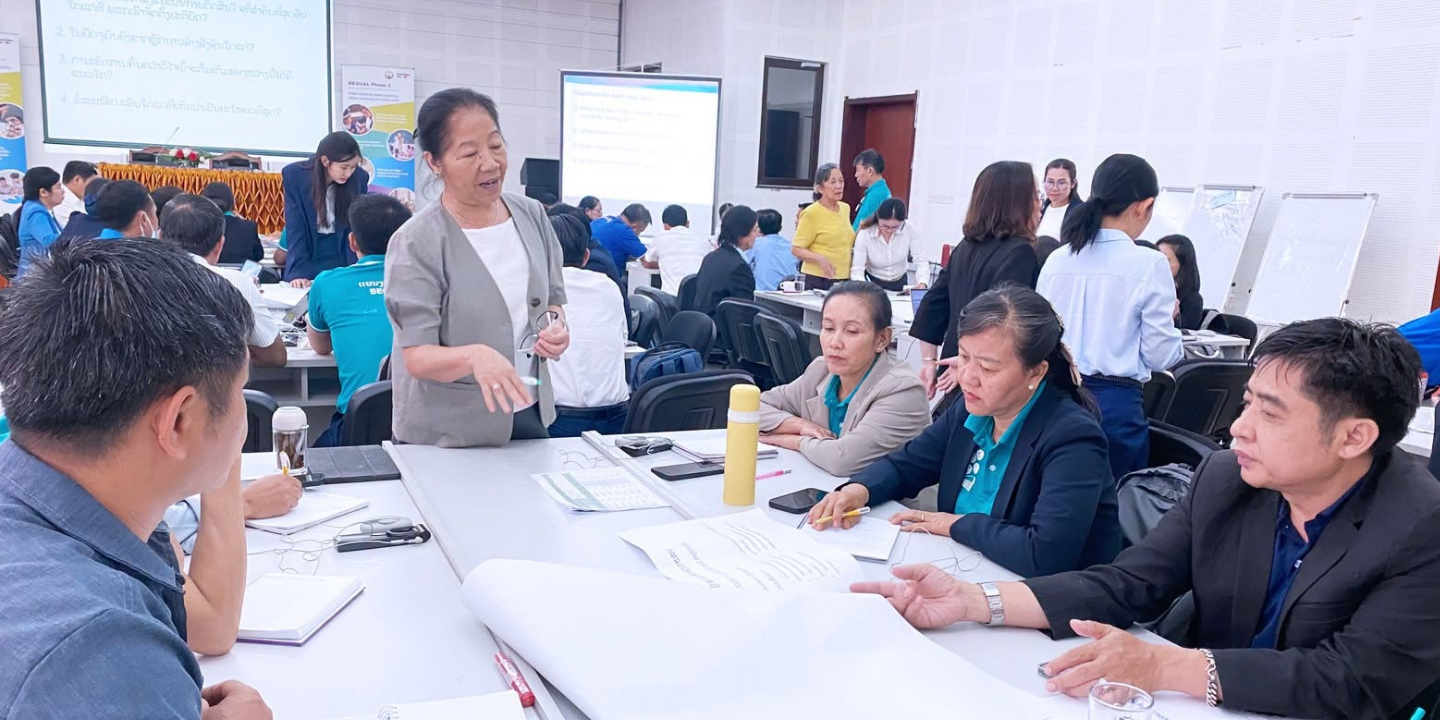
At a workshop on 7 September in Vang Vieng, the Ministry of Education and Sports’ (MoES) Research Institute for Educational Sciences and Lao Language Research Center (RIES), the Australian Embassy, the Australian Government-supported Basic Education Quality and Access in Lao PDR (BEQUAL) program and ACER launched the research partnership.
ACER is providing technical leadership across the research design, student assessment, questionnaires, classroom observation, and evaluation of teaching and learning materials. This will connect evidence about student progress with classroom practice and the support and resources available to teachers.
The study builds on ACER’s long-running contribution to BEQUAL and adapts tools developed and piloted in Cambodia by ACER through the ASEAN-UK Supporting the Advancement of Girls’ Education programme.
First Secretary of the Australian Embassy in Lao PDR, Michael Currie said the study connects evidence about student learning with the everyday work of teachers.
‘We know that children’s home language and circumstances can shape their opportunities to learn. This research will help us understand what teachers can do in the classroom, how materials and professional learning support them, and where further investment can make the greatest difference,’ said Michael.
The study will track Lao language and literacy growth among Grade 1 and Grade 3 students over the 2026–27 school year. MoES researchers are conducting baseline Early Grade Learning Assessments with 3,000 students in 250 schools, split evenly between BEQUAL target and non-target districts, and will complete endline assessments in 2027.
Classroom observations will examine literacy focus areas, task types, teaching approaches such as differentiation and mother-tongue support, and assessment practices. Researchers will also evaluate 45 Grade 1 and Grade 3 Lao Language lessons and Grade 1 Spoken Lao materials.
Turning evidence into practical support for teachers
The study will help to understand how students make progress and which teaching approaches, support conditions and resources may contribute to that growth. The findings will inform teacher continuing professional development, curriculum and materials improvement, the continued implementation of Spoken Lao, and the Ministry’s 6+3+3 education reform which extends primary school from 5 to 6 years.
‘Teachers are being asked to respond to students with very different starting points, including children who are learning Lao as an additional language. By studying classroom practice alongside student progress and the materials teachers use, we can develop practical recommendations that respond to the realities teachers face,’ said Michael.
The September launch brought together representatives from central and local education authorities, teacher training colleges, the Australian Embassy, BEQUAL, ACER and other development partners. Fieldwork is now underway, with partners to interpret and report on the findings in 2027.